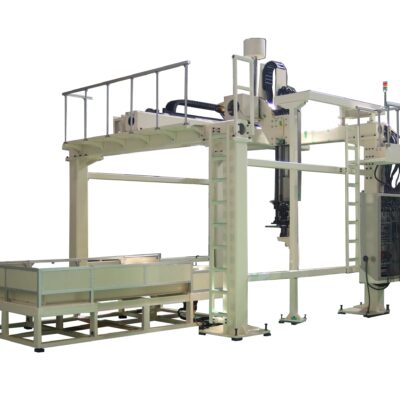
A thorough analysis of the gantry loader
In the manufacturing industry, improving productivity and automation are important factors that determine a company's competitiveness. In recent years, the need for automation has been increasing against the backdrop of issues such as labor shortages and rising labor costs. Among these, gantry loaders are attracting attention in a wide range of fields as automated equipment that combines efficient transportation with high precision. In this column, we will provide a detailed explanation of the basic structure and operating principles of gantry loaders, as well as the benefits of introducing them, specific use cases, the latest technological trends, and points to note when considering introducing them.
Basic structure and operating principle of gantry loader
A gantry loader is a transport device equipped with a gate-shaped frame (gantry frame). This frame has the advantage of being able to cover a wide work area by running on rails installed on the ceiling or base. In addition, the gantry frame incorporates multiple axes, such as a traverse axis and an elevation axis, enabling complex transport work through multi-axis operation.
Specifically, it is made up of a traveling axis (X-axis) where the gantry frame moves on a rail, a traverse axis (Y-axis) where the slider attached to the frame moves left and right, and a lift axis (Z-axis) where the arm mounted on the slider moves up and down. The hand that grasps the workpiece is installed at the end of the arm, and various types are available to suit the shape and material of the workpiece.
By combining these axes, the gantry loader can move workpieces freely in three-dimensional space, just like a human arm. For example, it can automatically perform a series of operations such as taking a workpiece from storage, feeding it into a processing machine, taking the processed workpiece out, and transporting it to an inspection device.
The operation of the gantry loader is controlled by an NC (Numerical Control) program. This allows for highly accurate positioning and high-speed operation, helping to reduce cycle times. In addition, by combining sensors and image processing technology, the presence and position of workpieces can be accurately detected, enabling more flexible transport operations.
Automation and labor-saving effects of introduction
Productivity improvement
The introduction of gantry loaders brings various benefits to manufacturing sites. The first is improved productivity through automation. High-speed and accurate transport shortens cycle times and increases production volume. In addition, eliminating human error leads to more stable quality.
Supports high-mix, low-volume production
Gantry loaders can flexibly handle small-lot, multi-product production. By changing the NC program, it is possible to handle workpieces of different shapes and sizes, enabling efficient production of a wide variety of products.
24-hour operation possible
Another major benefit is 24-hour operation. Unmanned operation is possible even at night and on holidays, maximizing production capacity. This also contributes to shortening delivery times and reducing lead times.
Improved safety
Gantry loaders also contribute to improving safety. By automating dangerous tasks and the transportation of heavy objects, the burden on workers can be reduced and the risk of workplace accidents can be reduced.
Reduce labor costs
In terms of labor saving, you can also expect a reduction in labor costs. Since there is no need to allocate manpower to transportation work, labor costs can be reduced and cost competitiveness can be strengthened. Furthermore, the introduction of gantry loaders leads to more effective use of human resources. It is possible to assign personnel from simple tasks to more creative tasks.
Main industries where Gundry loaders are used
Gantry loaders are highly versatile and are used widely in a variety of industries.
automotive industry
In the automotive industry, gantry loaders are used to transport workpieces on processing lines for engine parts, transmission parts, etc. They contribute to the efficiency of production lines by transporting heavy parts and parts with complex shapes accurately and quickly. They are also used to transport steel plates on press lines and to supply parts on assembly lines.
Electronic Components Industry
In the electronic parts industry, gantry loaders are used to transport printed circuit boards and semiconductor wafers. These parts are very delicate and difficult to handle, so they require high precision and stable transportation. Gantry loaders meet these demands and support the production of high-quality electronic parts. They are also used to supply parts on component mounting lines and transport workpieces in inspection processes.
Metal Processing Industry
In the metal processing industry, gantry loaders are used to load and unload workpieces into and from machine tools, and to transport workpieces on forging and casting lines. They contribute to ensuring the safety of workers and improving work efficiency by safely transporting high-temperature and heavy workpieces. They are also used to transport workpieces in heat treatment processes.
Other Information
Gantry loaders are also used in a variety of other fields, including the food industry, pharmaceutical industry, and logistics warehouses.
Latest trends in gundry loader technology
In recent years, gantry loaders have further evolved through integration with the latest technology.
IoT Utilization
By utilizing data obtained from IoT sensors, it is possible to monitor equipment operation status and predict failures. This allows for predictive maintenance and minimizes equipment downtime. In addition, by linking with cloud systems, remote monitoring and data analysis are possible, resulting in more efficient operation management. Furthermore, by linking with production management systems, it also contributes to understanding real-time production status and ensuring traceability.
Other Information
By linking with articulated robots, it is possible to automate more complex transport and assembly tasks. In addition, by linking with collaborative robots, humans and robots can work safely in the same space, making it possible to build a production system that is both flexible and efficient. Furthermore, by linking with 3D printers, the production of molds and jigs can be automated, shortening lead times and reducing costs.
Important points to note when considering implementation
The successful introduction of a gantry loader requires careful consideration and planning in advance.
First, it is important to clarify the purpose of the introduction. By specifically considering what you want to automate and what effect you expect to achieve, you can select the most suitable gantry loader.
Next, you need to consider the characteristics of the workpiece and the transport conditions. By understanding the size, shape, weight, material, etc. of the workpiece and clarifying conditions such as transport distance, cycle time, and accuracy, you can select a gantry loader with the required performance.
Linkage with peripheral devices is also an important factor. By considering linkage with peripheral devices such as machine tools, transport conveyors, and stockers, a smooth transport system can be constructed. It is also important to consider the design of the entire system and customize it as necessary.
It is also necessary to thoroughly consider the introduction and running costs in advance. It is necessary to consider not only the initial introduction cost, but also maintenance costs, electricity bills, and other running costs to evaluate the return on investment.
The operation and maintenance system after implementation is also an important point. By establishing an operation and maintenance system after implementation and planning for dealing with problems and regular maintenance, stable operation can be maintained.
Don't forget about safety measures. Installing safety fences and sensors and taking thorough safety measures can ensure the safety of workers. It is also important to provide safety education to workers.
Taking these points into consideration, selecting a gantry loader that suits your company's challenges and needs, and creating an effective implementation plan are the keys to success.
Examples of our Gundry Loaders
Gundry loader for the mold manufacturing industry
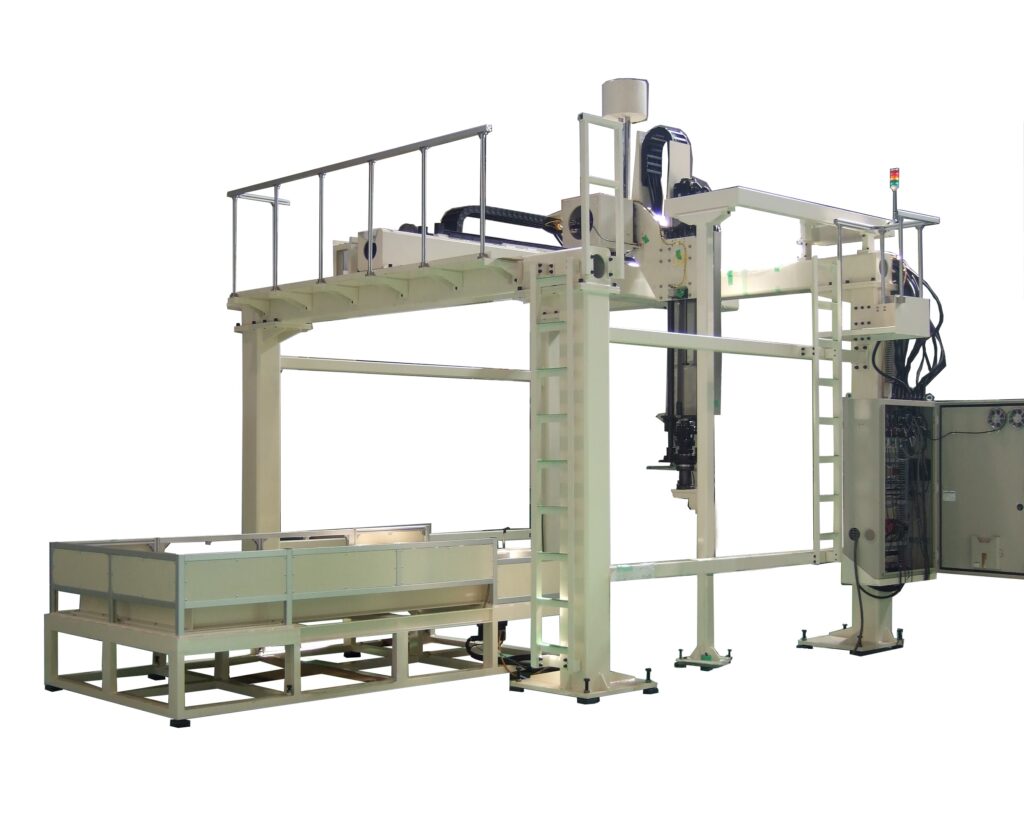
Workpiece: Mold Workpiece weight: 110kg Workpiece size: φ180-270 x L75-400mm
If you have any questions or concerns, please contact the "Equipment and Automatic Machine Parts Reverse Engineering Center."
Reverse engineering is an effective way to accelerate product development and strengthen competitiveness in the manufacturing industry. At the "Equipment and Automated Machine Parts Reverse Engineering Center," we will provide detailed support for any concerns you may have about reverse engineering. Please feel free to contact us if you are considering this.