
Reverse Engineering Techniques: Material Selection Based on Application (Part 2)
Introduction

When using reverse engineering to repair old machinery and restore parts, one of the biggest headaches is determining the material of the parts.
If the part is made from the same material as the damaged part, some people may think that since the original part is still available, it would be easy to distinguish by measuring it with a measuring tool or by looking at the color, but this is not always the case.
In this column, continuing from the previous one, I will explain in detail the specific situations in which this material should be selected.
When should you use what material?
3. The base and case of the machine where vibration occurs.
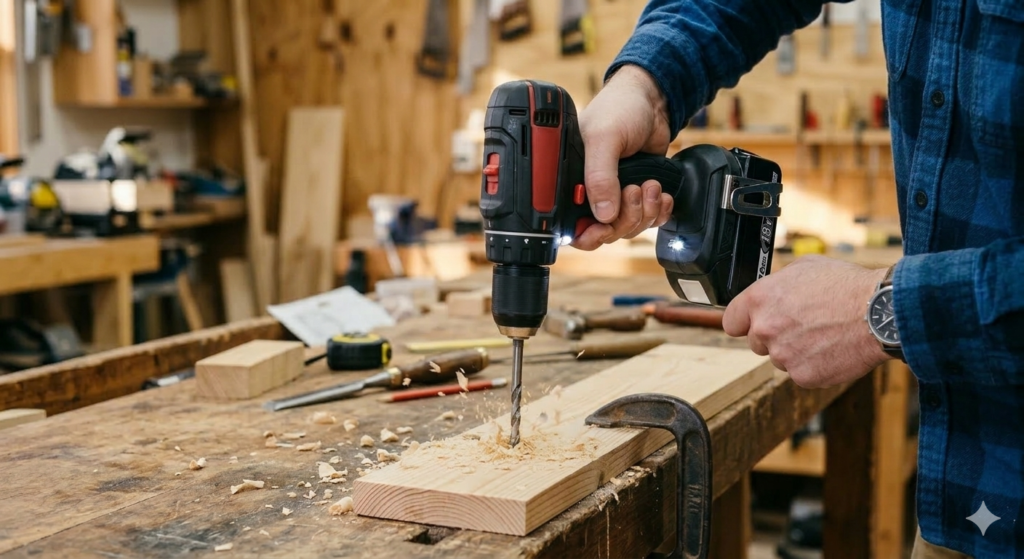
As a special case, cast iron is often used for the bodies of power tools such as drills and for the bodies of gear reducers.
Furthermore, for larger machines, the base of the processing machine is often made of cast iron.
The reasons for selecting castings are that, as they are cast products, they can be molded into complex shapes, and they have high vibration absorption properties, making them suitable for absorbing vibrations from the drill body and processing machine.
However, while the advantages of casting, which involves creating molds and casting, are evident in the mass production of these parts, in the case of reverse engineering, where only a very small amount is produced, designing and manufacturing a mold to produce just one part becomes extremely costly. Therefore, we sometimes suggest alternatives such as machined cast iron parts.
4. Large gears and shafts subjected to heavy loads
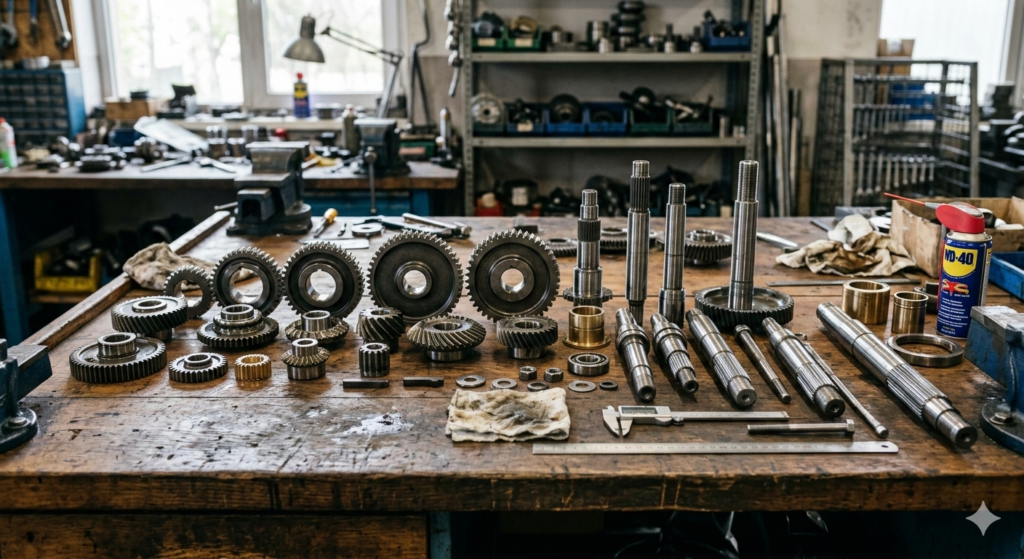
The output shaft and gears of a gearbox are designed to move components that cannot be moved by the motor alone. By combining gears with these components, the rotational speed is reduced, but the torque is increased, allowing the target component to move smoothly and effortlessly.
Therefore, a large force is applied to the shaft and gears, and in the worst case, the gear teeth may break or the shaft may be damaged.
For places subjected to such heavy loads, a material called chromium-molybdenum steel is used.
Heat treatment significantly increases hardness, while the material before heat treatment also possesses toughness (ductility).
When used in gears, the surface of the blade is hardened and then tempered, resulting in a component that is hard on the surface and tough on the inside.
Please contact us if you need assistance with drawing machines or machine parts!
We are happy to answer any questions you may have about machinery, including old machines that are no longer working properly.
If you have any problems with your old machine, please feel free to contact us using the inquiry form below!

What are the essential points to check when reverse engineering!? <Part 4 - Manufacturer>
Introduction Reverse engineering, while a broad term, deals with a wide variety of machines and parts. Analyzing such diverse objects using reverse engineering is no easy task. In fact, when proceeding with reverse engineering…

Enhanced safety features through reverse engineering: Area sensors
Introduction Reverse engineering often involves requests to recreate parts from older machinery that are no longer supported. However, many older machines prioritize production capacity and do not meet modern safety standards, and the machines are problematic…
Enhanced safety features through reverse engineering – Double switch
Introduction Reverse engineering often involves requests to recreate parts from older machinery that are no longer supported. However, many older machines prioritize production capacity and do not meet modern safety standards, and the machines are problematic…
Reverse Engineering for Enhanced Safety – Safety Fences
Introduction Reverse engineering often involves requests to recreate parts from older machinery that are no longer supported. However, many older machines prioritize production capacity and do not meet modern safety standards, and the machines are problematic…
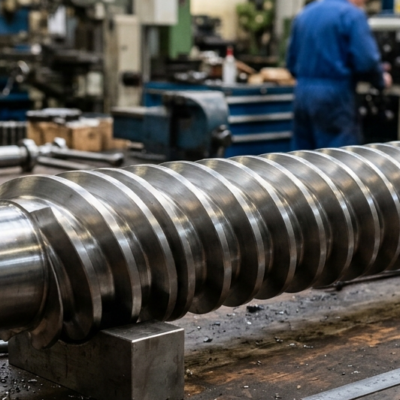
Reverse Engineering and Components ~Screw Shafts~
Introduction When older machinery is beyond repair, we receive inquiries about reverse engineering. While we receive inquiries about a wide variety of machines, there are certain parts that we are surprisingly often asked to work on. This column will discuss such parts…

Reverse Engineering: How to Avoid Failure? Part 2
Introduction: Reverse engineering is a technique that can repair parts of machines whose support has ended, but it cannot repair all products and parts, and there is a possibility of failure. This column will explain how to perform reverse engineering…
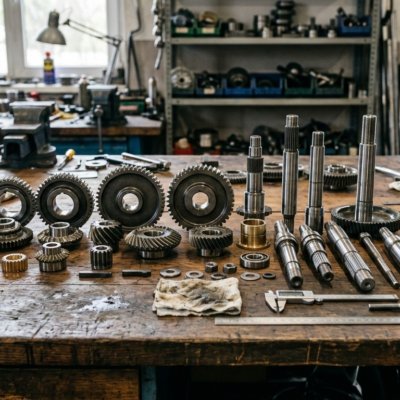
Difficult even with the physical object? Reverse Engineering of Gears
Introduction Gears are a common subject of reverse engineering requests due to their failure. While the basic mechanism of power transmission is the same, the shapes and combinations of gears vary greatly depending on their application. Even I, the author, discover something new every time I research gears…
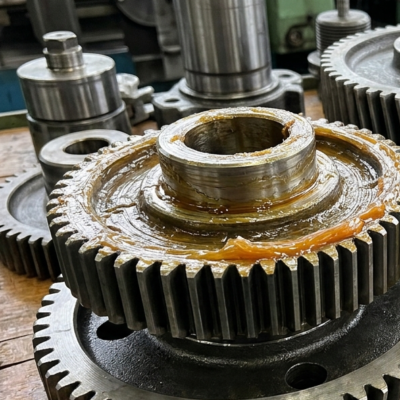
Points to note when choosing grease
Introduction: Most machines with rotating parts, such as shafts, use bearings. Inside the bearings, grease is sealed to prevent wear and ensure smooth operation. Different types of grease are used depending on the application…
Reverse Engineering Techniques: Material Selection Based on Application (Part 3)
Introduction When using reverse engineering to repair old machines and restore parts, the material of the part can be a headache. If you make a new part using the same material as the damaged part, you can't easily distinguish it by measuring it with measuring tools or by looking at its color because the original part is still available...
What are the advantages of 3D printers that shine through reverse engineering?
Introduction 3D printers have become commonplace, not only in the manufacturing industry but also among many people who use them personally as a hobby. However, there are many advantages to effectively utilizing 3D printers in the field of reverse engineering. This time…
What are the essential points to check when reverse engineering!? <Part 3 - Components>
Introduction Reverse engineering, while a broad term, deals with a wide variety of machines and parts. Analyzing such diverse objects using reverse engineering is no easy task. In fact, when proceeding with reverse engineering…
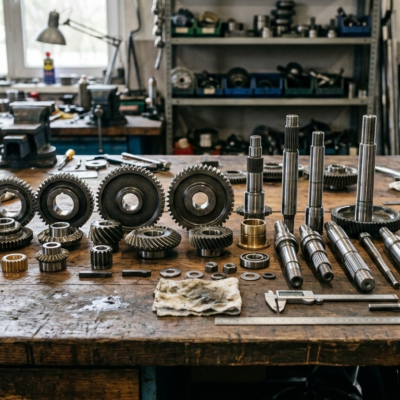
Reverse Engineering Techniques - Selecting Materials by Use, Part 1
Introduction When using reverse engineering to repair old machines and restore parts, the material of the part can be a headache. If you make a new part using the same material as the damaged part, you can't easily distinguish it by measuring it with measuring tools or by looking at its color because the original part is still available...
Reverse Engineering Techniques - Material and Substance Investigation Part 2
Introduction When using reverse engineering to repair old machines and restore parts, the material of the part can be a headache. If you make a new part using the same material as the damaged part, you can't easily distinguish it by measuring it with measuring tools or by looking at its color because the original part is still available...

Reverse engineering technology - material and substance investigation
Introduction When using reverse engineering to repair old machines and restore parts, the material of the part can be a headache. If you make a new part using the same material as the damaged part, you can't easily distinguish it by measuring it with measuring tools or by looking at its color because the original part is still available...
How to avoid failure in reverse engineering? Part 1
Introduction Reverse engineering is a technique that can restore parts of machines that are no longer supported, but it cannot restore all products or parts, and there is a possibility that it will fail. In this column, we will explain how to reverse engineer...