
Reverse Engineering Techniques: Material Selection Based on Application (Part 3)
Introduction

When using reverse engineering to repair old machinery and restore parts, one of the biggest headaches is determining the material of the parts.
If the part is made from the same material as the damaged part, some people may think that since the original part is still available, it would be easy to distinguish by measuring it with a measuring tool or by looking at the color, but this is not always the case.
In this column, continuing from the previous two articles, I will explain in detail the specific situations in which this material should be selected.
When should you use what material?
5. Areas that come into contact with easily damaged processed products
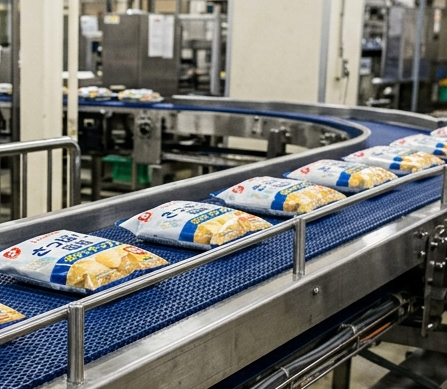
In most cases, conveyors used to transport processed goods are equipped with guards on both sides to prevent the goods from falling.
If this guard were made of a metal part that is harder than the processed product, there is a possibility that the processed product could be scratched.
Furthermore, if the tips of the handles used to grasp and carry the processed goods are made of hard materials, there is a possibility that the processed goods may be damaged.
Engineering plastics, commonly known as "engineering plastics," are often used in parts of processed products that come into contact with the surface.
Even though we refer to them collectively as "engineering plastics," there are just as many types as metal materials, and I'd like to cover this in a column sometime. However, if you don't choose the right material that meets the requirements, in the worst case, the parts could break.
For guards and similar applications, engineering plastics such as POM (polyacetal) or UHMW-PE (ultra-high molecular weight polyethylene), which have self-lubricating properties and low coefficients of friction, are selected.
Furthermore, the water absorption, corrosion resistance, and abrasion resistance of each material differ depending on conditions such as whether it is related to food or an environment where it will be exposed to water, so it is necessary to select the appropriate material.
Please contact us if you need assistance with drawing machines or machine parts!
We are happy to answer any questions you may have about machinery, including old machines that are no longer working properly.
If you have any problems with your old machine, please feel free to contact us using the inquiry form below!

What are the essential points to check when reverse engineering!? <Part 4 - Manufacturer>
Introduction Reverse engineering, while a broad term, deals with a wide variety of machines and parts. Analyzing such diverse objects using reverse engineering is no easy task. In fact, when proceeding with reverse engineering…

Enhanced safety features through reverse engineering: Area sensors
Introduction Reverse engineering often involves requests to recreate parts from older machinery that are no longer supported. However, many older machines prioritize production capacity and do not meet modern safety standards, and the machines are problematic…
Enhanced safety features through reverse engineering – Double switch
Introduction Reverse engineering often involves requests to recreate parts from older machinery that are no longer supported. However, many older machines prioritize production capacity and do not meet modern safety standards, and the machines are problematic…
Reverse Engineering for Enhanced Safety – Safety Fences
Introduction Reverse engineering often involves requests to recreate parts from older machinery that are no longer supported. However, many older machines prioritize production capacity and do not meet modern safety standards, and the machines are problematic…
Reverse Engineering and Components ~Screw Shafts~
Introduction When older machinery is beyond repair, we receive inquiries about reverse engineering. While we receive inquiries about a wide variety of machines, there are certain parts that we are surprisingly often asked to work on. This column will discuss such parts…

Reverse Engineering: How to Avoid Failure? Part 2
Introduction: Reverse engineering is a technique that can repair parts of machines whose support has ended, but it cannot repair all products and parts, and there is a possibility of failure. This column will explain how to perform reverse engineering…
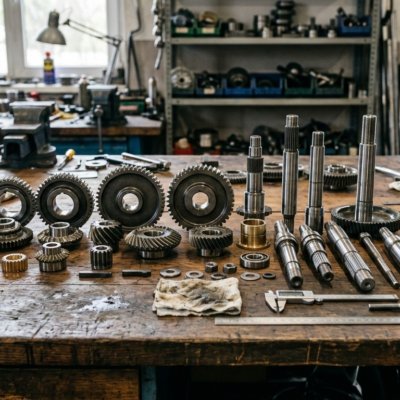
Difficult even with the physical object? Reverse Engineering of Gears
Introduction Gears are a common subject of reverse engineering requests due to their failure. While the basic mechanism of power transmission is the same, the shapes and combinations of gears vary greatly depending on their application. Even I, the author, discover something new every time I research gears…
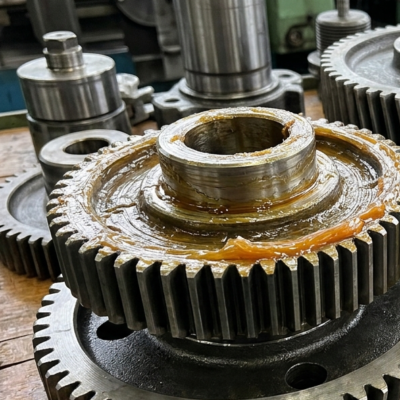
Points to note when choosing grease
Introduction: Most machines with rotating parts, such as shafts, use bearings. Inside the bearings, grease is sealed to prevent wear and ensure smooth operation. Different types of grease are used depending on the application…
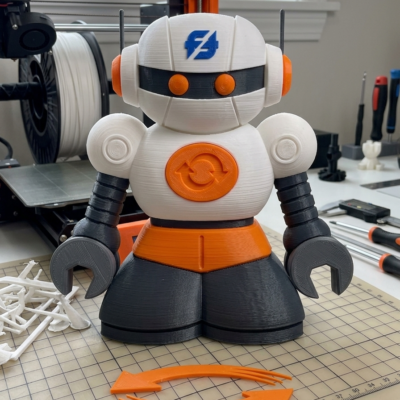
What are the advantages of 3D printers that shine through reverse engineering?
Introduction 3D printers have become commonplace, not only in the manufacturing industry but also among many people who use them personally as a hobby. However, there are many advantages to effectively utilizing 3D printers in the field of reverse engineering. This time…
What are the essential points to check when reverse engineering!? <Part 3 - Components>
Introduction Reverse engineering, while a broad term, deals with a wide variety of machines and parts. Analyzing such diverse objects using reverse engineering is no easy task. In fact, when proceeding with reverse engineering…

Reverse Engineering Techniques: Material Selection Based on Application (Part 2)
Introduction When using reverse engineering to repair old machines and restore parts, the material of the part can be a headache. If you make a new part using the same material as the damaged part, you can't easily distinguish it by measuring it with measuring tools or by looking at its color because the original part is still available...
Reverse Engineering Techniques - Selecting Materials by Use, Part 1
Introduction When using reverse engineering to repair old machines and restore parts, the material of the part can be a headache. If you make a new part using the same material as the damaged part, you can't easily distinguish it by measuring it with measuring tools or by looking at its color because the original part is still available...
Reverse Engineering Techniques - Material and Substance Investigation Part 2
Introduction When using reverse engineering to repair old machines and restore parts, the material of the part can be a headache. If you make a new part using the same material as the damaged part, you can't easily distinguish it by measuring it with measuring tools or by looking at its color because the original part is still available...

Reverse engineering technology - material and substance investigation
Introduction When using reverse engineering to repair old machines and restore parts, the material of the part can be a headache. If you make a new part using the same material as the damaged part, you can't easily distinguish it by measuring it with measuring tools or by looking at its color because the original part is still available...
How to avoid failure in reverse engineering? Part 1
Introduction Reverse engineering is a technique that can restore parts of machines that are no longer supported, but it cannot restore all products or parts, and there is a possibility that it will fail. In this column, we will explain how to reverse engineer...