
The Importance of Reverse Engineering in Molds
Reverse engineering plays a wide range of important roles in mold manufacturing, from reviving old molds to improving quality, reducing costs, and even passing on technology.
1. Reverse engineering in mold manufacturing
Reverse engineering is a technology that analyzes existing products and parts and reverse-calculates their design information and manufacturing methods to reproduce them. In particular, in the field of mold manufacturing, actual molds and products are converted into digital data, which is used for redesign, repair, or the development of new products.
In the mold industry, reverse engineering is primarily used to update or restore molds or products for which no 2D/3D data exists. Specifically, it refers to the process of creating data (such as IGES or STEP) that can be used with CAD, CAM, or CAE from scanned data of existing products. For example, even if an old mold was manufactured decades ago and the drawings have been lost, reverse engineering can be used to create an updated mold. Even if not only the mold drawings but also the 2D and 3D drawings of the product no longer exist, a 3D scan of the mold shape can be created to create a 3D model, allowing for the restoration and production of a mold that can mold a product of the same shape.
Furthermore, even if you do not have the data on hand, such as when data is lost due to server trouble or when updating a mold transferred from another company, as long as you have the actual mold or product, it is possible to update or restore it. By examining the mold that was actually used, grasping the distortion tendency, and reproducing the proven mold itself, we can create an updated mold or an additional mold.
In this way, reverse engineering can meet a wide range of needs, from restoring old molds and modifying existing molds to improve products, to creating molds from an image. It plays an essential role in improving the efficiency of mold manufacturing and product quality.
2. Reverse engineering process
Reverse engineering in mold manufacturing requires precise data acquisition and conversion. First, the target mold or product is measured with a 3D scanner to obtain its shape data. What is obtained at this initial stage is "point cloud data," in which the vertices of the shape are represented as a collection of points.
Point cloud data cannot be used for processing as is, so it must be converted into a format that can be processed. Specifically, the data takes on a concrete shape through processes such as "meshing," in which points are connected with lines, and "polygonization," in which surfaces are attached to clarify the shape. After that, "surfacing" is performed to optimize data volume and pursue smoothness of the shape. This surfacing process requires careful judgment to distinguish between surfaces that are necessary for the product and unnecessary surfaces that occurred during scanning (such as scratches). After going through this series of processes, high-precision product data that can be used for processing is finally completed.
The acquired and converted CAD data is processed by software and made editable. This data can then be used to repair existing molds, create new molds, or even modify and optimize designs. For example, when measuring existing products, detailed drawing data is created to take into account the selection of mold material and the shrinkage rate of the resin, and then mold design proceeds. For products with thread shapes, it is also possible to measure the thread shape of existing caps and molds, convert the necessary dimensions into drawing data, and then manufacture the product.
3. Benefits of mold reverse engineering
There are three advantages to using reverse engineering in mold manufacturing.
Efficient mold regeneration and duplication
By scanning the finished mold and converting it into CAD data, it is possible to replicate the same product in a short time and at low cost. Even old molds for which there is no 3D data can be reproduced with high quality, and molds with complex shapes can be recreated in a short time, leading to reduced modeling work and the realization of high-precision, high-quality molds.
Maintenance and quality improvement
Even if a mold is damaged during mass production, it can be repaired in a short time by scanning it, converting it into CAD data, and then remanufacturing it. This not only speeds up mass production, but also makes it possible to create high-quality data suitable for processing, which does not include defects caused by aging or impact.
Utilizing know-how and managing data
The shape data of manufactured molds can be fed back into design and analysis, helping to improve the quality of the next development. In addition, converting unused molds into CAD data also contributes to reducing management costs. By having data on molds for which no drawings exist, mold maintenance and tuning can be considered based on the data, dramatically improving work efficiency.
In this way, reverse engineering not only reduces labor and costs and improves quality, but also provides an effective solution to the issue of technology transfer that many companies face, making it an indispensable technology in the mold manufacturing industry.
Examples of our mold reverse engineering
Reverse Engineering of Blow Molds
If you have any questions or concerns, please contact the "Equipment and Automatic Machine Parts Reverse Engineering Center."
Reverse engineering is an effective way to accelerate product development and strengthen competitiveness in the manufacturing industry. At the "Equipment and Automated Machine Parts Reverse Engineering Center," we will provide detailed support for any concerns you may have about reverse engineering. Please feel free to contact us if you are considering this.

What are the essential points to check when reverse engineering!? <Part 4 - Manufacturer>
Introduction Reverse engineering, while a broad term, deals with a wide variety of machines and parts. Analyzing such diverse objects using reverse engineering is no easy task. In fact, when proceeding with reverse engineering…

Enhanced safety features through reverse engineering: Area sensors
Introduction Reverse engineering often involves requests to recreate parts from older machinery that are no longer supported. However, many older machines prioritize production capacity and do not meet modern safety standards, and the machines are problematic…
Enhanced safety features through reverse engineering – Double switch
Introduction Reverse engineering often involves requests to recreate parts from older machinery that are no longer supported. However, many older machines prioritize production capacity and do not meet modern safety standards, and the machines are problematic…
Reverse Engineering for Enhanced Safety – Safety Fences
Introduction Reverse engineering often involves requests to recreate parts from older machinery that are no longer supported. However, many older machines prioritize production capacity and do not meet modern safety standards, and the machines are problematic…
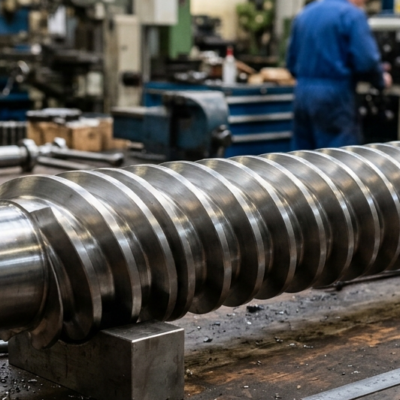
Reverse Engineering and Components ~Screw Shafts~
Introduction When older machinery is beyond repair, we receive inquiries about reverse engineering. While we receive inquiries about a wide variety of machines, there are certain parts that we are surprisingly often asked to work on. This column will discuss such parts…

Reverse Engineering: How to Avoid Failure? Part 2
Introduction: Reverse engineering is a technique that can repair parts of machines whose support has ended, but it cannot repair all products and parts, and there is a possibility of failure. This column will explain how to perform reverse engineering…
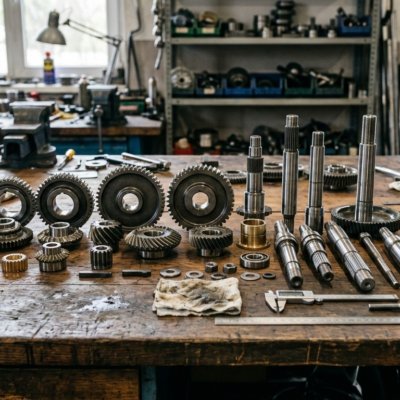
Difficult even with the physical object? Reverse Engineering of Gears
Introduction Gears are a common subject of reverse engineering requests due to their failure. While the basic mechanism of power transmission is the same, the shapes and combinations of gears vary greatly depending on their application. Even I, the author, discover something new every time I research gears…
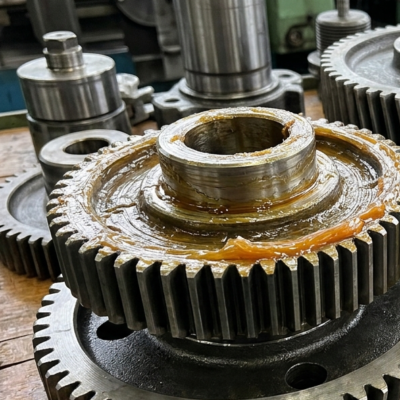
Points to note when choosing grease
Introduction: Most machines with rotating parts, such as shafts, use bearings. Inside the bearings, grease is sealed to prevent wear and ensure smooth operation. Different types of grease are used depending on the application…
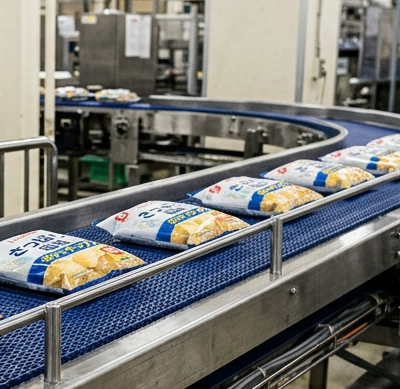
Reverse Engineering Techniques: Material Selection Based on Application (Part 3)
Introduction When using reverse engineering to repair old machines and restore parts, the material of the part can be a headache. If you make a new part using the same material as the damaged part, you can't easily distinguish it by measuring it with measuring tools or by looking at its color because the original part is still available...
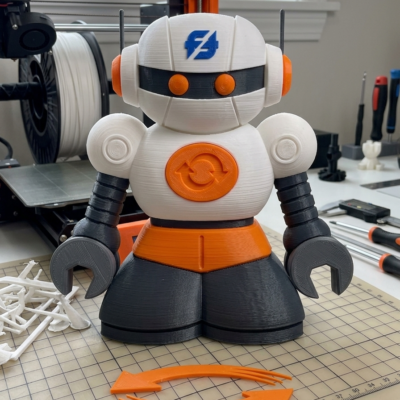
What are the advantages of 3D printers that shine through reverse engineering?
Introduction 3D printers have become commonplace, not only in the manufacturing industry but also among many people who use them personally as a hobby. However, there are many advantages to effectively utilizing 3D printers in the field of reverse engineering. This time…
What are the essential points to check when reverse engineering!? <Part 3 - Components>
Introduction Reverse engineering, while a broad term, deals with a wide variety of machines and parts. Analyzing such diverse objects using reverse engineering is no easy task. In fact, when proceeding with reverse engineering…

Reverse Engineering Techniques: Material Selection Based on Application (Part 2)
Introduction When using reverse engineering to repair old machines and restore parts, the material of the part can be a headache. If you make a new part using the same material as the damaged part, you can't easily distinguish it by measuring it with measuring tools or by looking at its color because the original part is still available...
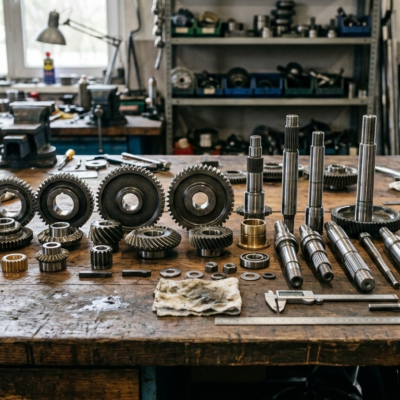
Reverse Engineering Techniques - Selecting Materials by Use, Part 1
Introduction When using reverse engineering to repair old machines and restore parts, the material of the part can be a headache. If you make a new part using the same material as the damaged part, you can't easily distinguish it by measuring it with measuring tools or by looking at its color because the original part is still available...
Reverse Engineering Techniques - Material and Substance Investigation Part 2
Introduction When using reverse engineering to repair old machines and restore parts, the material of the part can be a headache. If you make a new part using the same material as the damaged part, you can't easily distinguish it by measuring it with measuring tools or by looking at its color because the original part is still available...

Reverse engineering technology - material and substance investigation
Introduction When using reverse engineering to repair old machines and restore parts, the material of the part can be a headache. If you make a new part using the same material as the damaged part, you can't easily distinguish it by measuring it with measuring tools or by looking at its color because the original part is still available...