
What is reverse engineering? The process and benefits of drawing the actual product
1. What is actual drawing?
Drawing actual parts is a type of reverse engineering. While normal product development involves creating parts based on drawings, drawing actual parts is the opposite: it involves analyzing actual parts on hand and then working backwards from there to create blueprints and structures. Specifically, the shape data of the actual part is measured using various methods, and new drawings are created using CAD based on that data. With this technology, even if there are no drawings for an existing part, it is possible to replicate the part, restore damaged parts, or even improve it to create a new part. It can be used for a wide range of objects, from small palm-sized parts to huge parts.
▼Learn more about reverse engineering▼
2. Flow from actual item to drawing
1. Preparation of the actual item
The target part is prepared for measurement by cleaning it to remove any dirt or rust, and if a non-contact scanner is used, by spraying the surface with a material to reduce its gloss.
2. Selection of measurement method and data acquisition
The most suitable measurement method is selected depending on the size and shape of the part, and data is acquired. The main measurement methods are as follows.
・Manual measurement
For parts with relatively simple shapes, measuring instruments such as calipers and micrometers are used to measure the dimensions.
・3D scanner
There are two types of 3D scanners: contact and non-contact, each with different characteristics.
Contact type:Measurements are made by touching each point on the part with a probe and obtaining coordinates. This method is characterized by its ability to measure with extremely high accuracy. However, it cannot measure gaps that the probe cannot reach, and it takes a long time for complex shapes.
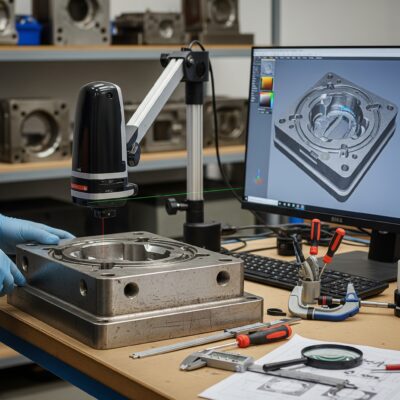
Non-contact type:The surface shape is scanned using a camera or laser without touching the part, and digital data called point cloud data is quickly acquired and measured. However, if the surface has glossy or black areas, a coating agent to reduce the gloss of the surface may be required.
Photogrammetry
Multiple photos of the actual object taken from various angles are analyzed to recreate its three-dimensional shape (3D data). The acquired data must then be processed and corrected to make it easier to use in CAD and drawing creation, such as by removing noise and integrating multiple scans.
3. Modeling with CAD software
Based on the acquired data, a 3D model of the part is constructed using 3D CAD. The shape is reproduced based on manually measured dimensions and point cloud data obtained from 3D scanning, and a digital part called a "solid" is created.
*Solid: A 3D shape defined as an entity with volume (thickness) in three-dimensional space.
4. Creating and outputting drawings
Finally, 3D drawings are created from the completed 2D model. Using the CAD software's functions, necessary projection views, such as front, side, and top views of the parts, are placed, and dimensions and annotations are added. Drawings are created in accordance with drafting regulations such as the Japanese Industrial Standards (JIS).
3. Benefits of drawing actual objects
Parts can be replicated, restored, and manufactured
We can reproduce parts that are difficult to obtain due to discontinued production or manufacturer closures. By continuing to use old equipment rather than investing in new equipment, you can reduce investment costs.
It also makes it easier to repair damaged parts for which there are no drawings and to secure spare parts, which helps prevent production line shutdowns due to a shortage of spare parts.
Accurate transmission of part information
Even for parts with complex shapes, accurate information can be conveyed if drawings conform to JIS drafting standards, which helps to eliminate misunderstandings among stakeholders.
Cost reduction and performance improvement
By measuring and analyzing existing parts, it is possible to design improved versions with higher precision, or to reduce costs by producing original parts in-house if they are expensive.
Passing on technology and know-how
By analyzing parts that require skilled craftsmanship during manufacturing, prototypes for which no drawings exist, and products from other companies, we can clarify their structure and components. This allows us to obtain information that is useful for passing on craftsmanship and improving and developing products in-house.
4. Key points to remember when creating actual drawings
There are a few points to keep in mind when creating drawings of actual parts. When requesting drawings of discontinued parts, we recommend that you contact a company that keeps the following points in mind.
We have established measurement methods and environments to ensure accuracy.
When creating drawings of actual objects, it is important to "minimize measurement errors." When measuring manually, it is necessary to be careful to apply the measuring instrument straight and to avoid sagging. Digital measuring instruments can provide stable and accurate measurements if they are calibrated regularly.
Also, temperature changes of the object can affect its dimensions, so if possible, measurements should be taken in an environment with a constant room temperature.
Efficient modeling
An efficient approach to CAD modeling is to first build the rough outline of the entire part, and then add details such as holes and chamfers.
If there are incomplete parts in the scanned data, you can flexibly supplement it with other information, such as actually seeing the actual item or holding it in your hands to check its shape, and efficiently proceed with the creation of the drawing.
Legal and ethical considerations are taken into account
In principle, reverse engineering itself is legal. However, if the drawings or data created are made public or used for commercial purposes, there is a risk of infringing intellectual property rights such as patents and design rights. Therefore, the drawings created should be used only for internal review and maintenance, and great care should be taken to avoid distributing them without permission. Permission must also be obtained if necessary.
If you have any questions or concerns, please contact the "Equipment and Automatic Machine Parts Reverse Engineering Center."
Reverse engineering, such as creating drawings of actual products, is an effective way to accelerate product development in the manufacturing industry and strengthen competitiveness. At the Equipment and Automatic Machine Parts Reverse Engineering Center, we will provide detailed support for any concerns you may have about creating drawings of actual products. Please feel free to contact us if you are considering this service.

Enhanced safety features through reverse engineering: Area sensors
Introduction Reverse engineering often involves requests to recreate parts from older machinery that are no longer supported. However, many older machines prioritize production capacity and do not meet modern safety standards, and the machines are problematic…
Enhanced safety features through reverse engineering – Double switch
Introduction Reverse engineering often involves requests to recreate parts from older machinery that are no longer supported. However, many older machines prioritize production capacity and do not meet modern safety standards, and the machines are problematic…
Reverse Engineering for Enhanced Safety – Safety Fences
Introduction Reverse engineering often involves requests to recreate parts from older machinery that are no longer supported. However, many older machines prioritize production capacity and do not meet modern safety standards, and the machines are problematic…
Reverse Engineering and Components ~Screw Shafts~
Introduction When older machinery is beyond repair, we receive inquiries about reverse engineering. While we receive inquiries about a wide variety of machines, there are certain parts that we are surprisingly often asked to work on. This column will discuss such parts…

Reverse Engineering: How to Avoid Failure? Part 2
Introduction: Reverse engineering is a technique that can repair parts of machines whose support has ended, but it cannot repair all products and parts, and there is a possibility of failure. This column will explain how to perform reverse engineering…
Difficult even with the physical object? Reverse Engineering of Gears
Introduction Gears are a common subject of reverse engineering requests due to their failure. While the basic mechanism of power transmission is the same, the shapes and combinations of gears vary greatly depending on their application. Even I, the author, discover something new every time I research gears…
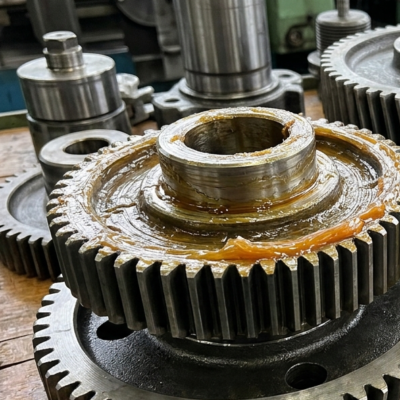
Points to note when choosing grease
Introduction: Most machines with rotating parts, such as shafts, use bearings. Inside the bearings, grease is sealed to prevent wear and ensure smooth operation. Different types of grease are used depending on the application…
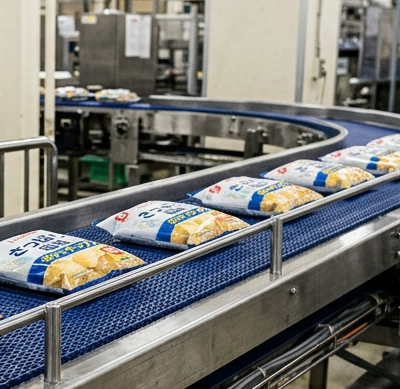
Reverse Engineering Techniques: Material Selection Based on Application (Part 3)
Introduction When using reverse engineering to repair old machines and restore parts, the material of the part can be a headache. If you make a new part using the same material as the damaged part, you can't easily distinguish it by measuring it with measuring tools or by looking at its color because the original part is still available...
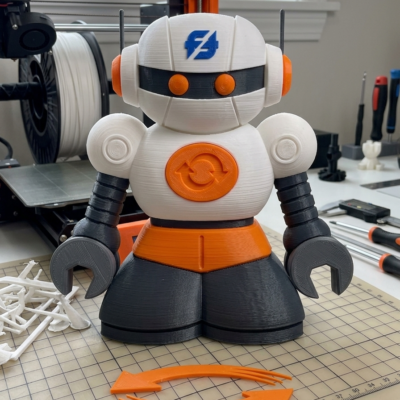
What are the advantages of 3D printers that shine through reverse engineering?
Introduction 3D printers have become commonplace, not only in the manufacturing industry but also among many people who use them personally as a hobby. However, there are many advantages to effectively utilizing 3D printers in the field of reverse engineering. This time…

What are the essential points to check when reverse engineering!? <Part 3 - Components>
Introduction Reverse engineering, while a broad term, deals with a wide variety of machines and parts. Analyzing such diverse objects using reverse engineering is no easy task. In fact, when proceeding with reverse engineering…
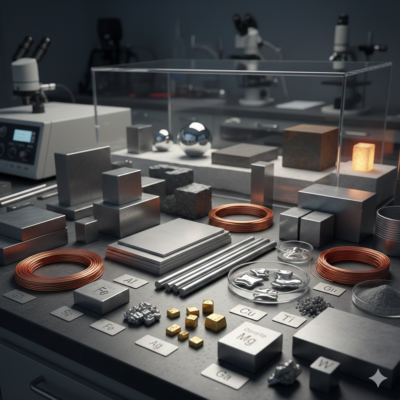
Reverse Engineering Techniques: Material Selection Based on Application (Part 2)
Introduction When using reverse engineering to repair old machines and restore parts, the material of the part can be a headache. If you make a new part using the same material as the damaged part, you can't easily distinguish it by measuring it with measuring tools or by looking at its color because the original part is still available...
Reverse Engineering Techniques - Selecting Materials by Use, Part 1
Introduction When using reverse engineering to repair old machines and restore parts, the material of the part can be a headache. If you make a new part using the same material as the damaged part, you can't easily distinguish it by measuring it with measuring tools or by looking at its color because the original part is still available...
Reverse Engineering Techniques - Material and Substance Investigation Part 2
Introduction When using reverse engineering to repair old machines and restore parts, the material of the part can be a headache. If you make a new part using the same material as the damaged part, you can't easily distinguish it by measuring it with measuring tools or by looking at its color because the original part is still available...

Reverse engineering technology - material and substance investigation
Introduction When using reverse engineering to repair old machines and restore parts, the material of the part can be a headache. If you make a new part using the same material as the damaged part, you can't easily distinguish it by measuring it with measuring tools or by looking at its color because the original part is still available...
How to avoid failure in reverse engineering? Part 1
Introduction Reverse engineering is a technique that can restore parts of machines that are no longer supported, but it cannot restore all products or parts, and there is a possibility that it will fail. In this column, we will explain how to reverse engineer...